Iraqi Sulfur, Phosphate Rock and Industrial Minerals
PETROXIUM coordinates sourcing of sulfur and phosphate rock from qualified Iraqi suppliers for international buyers. Each enquiry is matched to your specification, volume and destination.
Main Minerals
Specifications are agreed for each contract and confirmed by inspection for every cargo.
Iraqi Sulfur
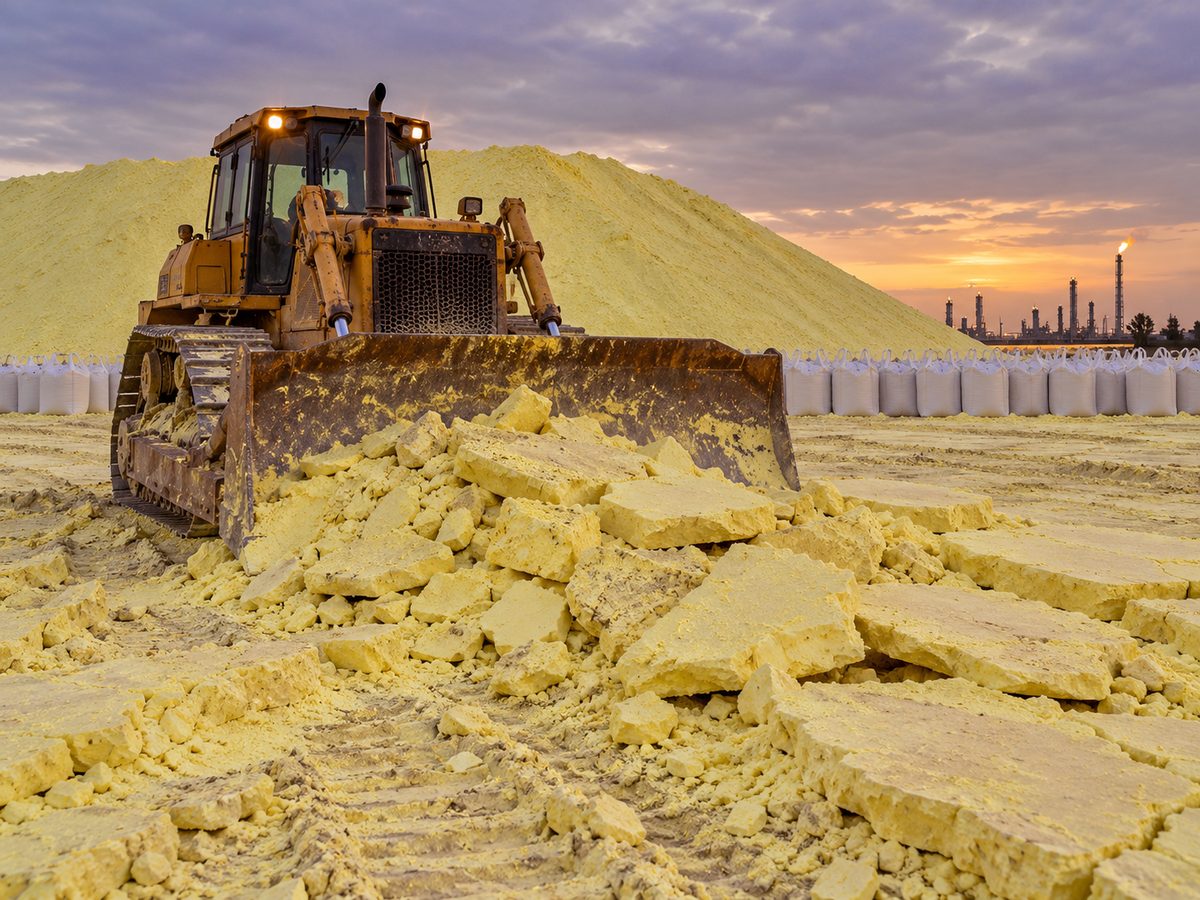
Most sulfur exported from Iraq is recovered sulfur, produced at Iraqi oil refineries and natural gas processing plants when sulfur is removed from oil and gas. It is a high-purity product of 99.5% to 99.8% sulfur, and a key raw material for sulfuric acid, phosphate fertilisers, rubber vulcanisation and the chemical industry. Iraq also has natural sulfur deposits in the north of the country.
Supplied in lump or crushed form, in bulk or jumbo bags. Purity, moisture, ash and acidity are confirmed by a certificate of analysis for each cargo. Tell us the quantity, form, packaging and destination port you need, and we coordinate with qualified Iraqi suppliers to match it.
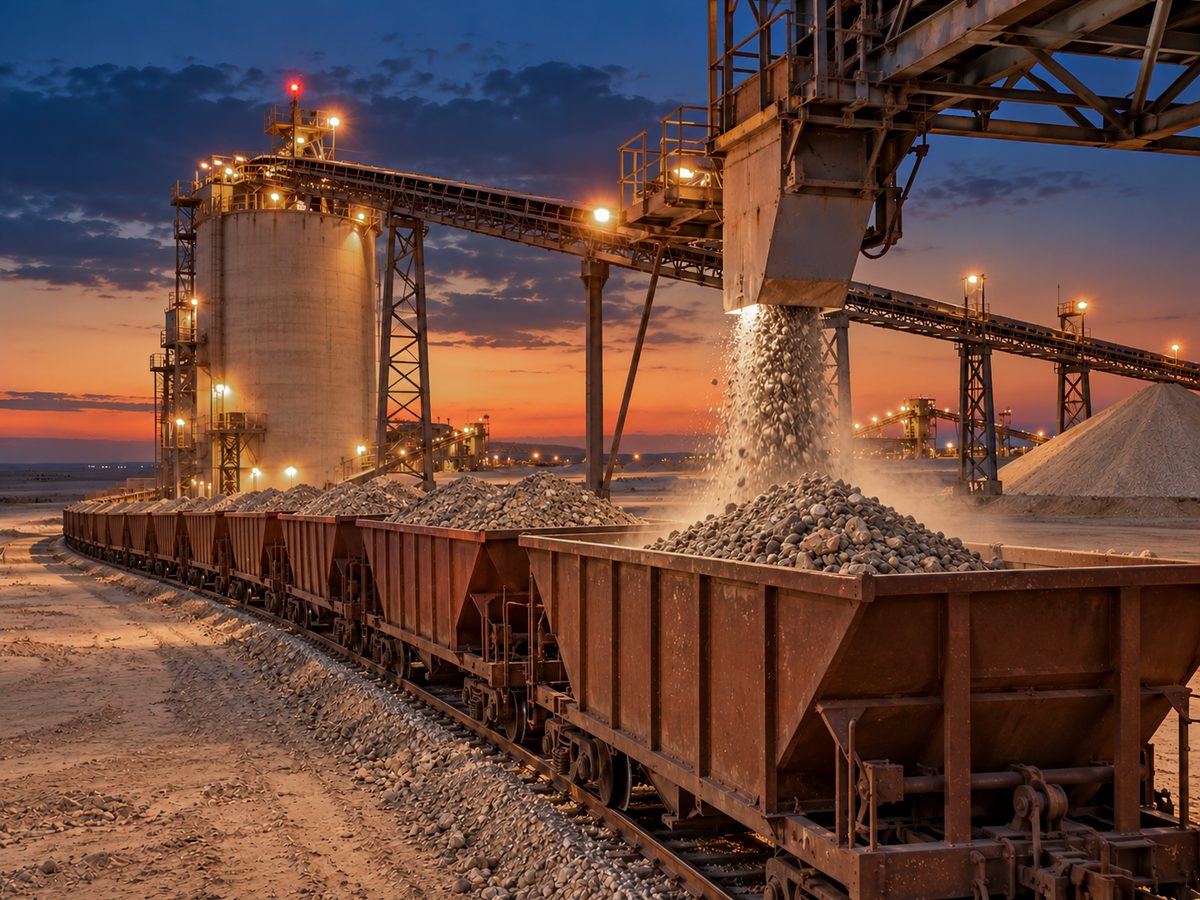
Iraq’s phosphate deposits lie in the Western Desert of Anbar province, centred on the Akashat area near the Syrian border, with phosphate resources estimated by Iraqi geological studies at up to 10 billion tonnes. The sedimentary rock has long supplied phosphate fertiliser production in Iraq, and is the raw material for phosphoric acid, superphosphate (SSP and TSP), DAP and MAP fertilisers and animal feed phosphates.
Raw Iraqi phosphate rock typically contains around 20–22% P2O5, with higher grades available after beneficiation. P2O5 content, particle size, moisture and impurity limits are confirmed by a certificate of analysis for each cargo. Tell us the grade, quantity, packaging and destination port you need, and we coordinate sourcing from qualified Iraqi suppliers.
A Country Rich in Minerals and Industrial Commodities
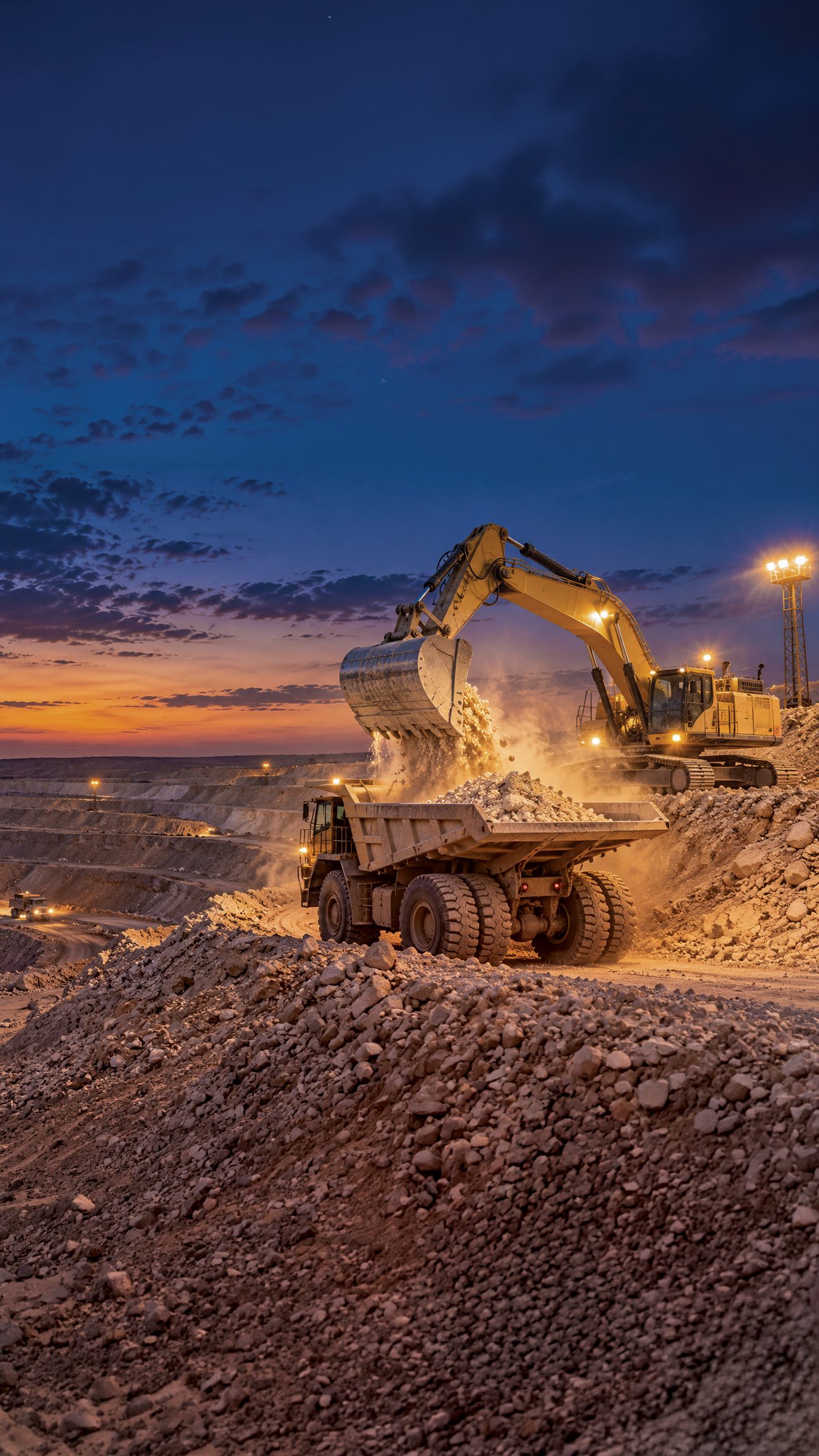
Iraq has a broad base of industrial minerals, together with industrial commodities produced from its natural gas and limestone. An overview of the main ones:
Industrial mineralsIndustrial commodities
Gy01
Gypsum
Soft calcium sulfate mineral (CaSO₄·2H₂O). Added to cement to control setting, and used in plaster, plasterboard and as a soil conditioner.
Cement, plaster and plasterboard
Ls02
Limestone
Sedimentary rock of calcium carbonate (CaCO₃). The main raw material for cement and lime, and used as construction aggregate and a flux in steelmaking.
Cement, lime and aggregate
Ss03
Silica Sand
High-quartz sand (SiO₂). Used in glassmaking, foundry moulds and cores, water filtration and construction products.
Glass, foundry and filtration
Is04
Industrial Salt
Sodium chloride (NaCl) from rock salt and salt flats. Feedstock for chlorine and caustic soda, and used in water treatment and de-icing.
Chlorine, caustic soda and water treatment
Bn05
Bentonite and Industrial Clay
Bentonite is a swelling clay used in oil-well drilling fluids and foundry sand; other industrial clays go into ceramics, bricks and tiles.
Drilling fluids and ceramics
Do06
Dolomite
Calcium-magnesium carbonate rock. Used as a flux and refractory material in steelmaking, in glass production and as agricultural lime.
Steel, glass and agriculture
Ct07
Celestine
Strontium sulfate (SrSO₄), the main source of strontium. Processed into strontium carbonate for ceramics, magnets and pyrotechnics.
The main source of strontium
Ur08
Urea
Nitrogen fertiliser with 46% nitrogen, made from ammonia produced from natural gas. Also used in diesel exhaust fluid and urea-formaldehyde resins.
Nitrogen fertiliser
An09
Ammonia
Produced from natural gas (NH₃). The building block of nitrogen fertilisers, and used in refrigeration and chemical manufacturing.
Fertilisers and chemicals
Pc10
Cement
Hydraulic binder for concrete and mortar, such as ordinary Portland and sulfate-resisting cement, used throughout construction.
Concrete and construction
Ck11
Cement Clinker
Nodules made by firing limestone and clay in a kiln. Ground with gypsum to make cement, and traded to cement grinding plants.
Ground into cement
Ql12
Quicklime
Calcium oxide (CaO), made by burning limestone. Used in steelmaking, water treatment, flue gas cleaning, construction and chemicals.
Steel and water treatment
FROM ENQUIRY TO LOADING
How Supply Works
Every cargo is agreed, verified and documented before it leaves Iraq.
01
Specification and Analysis
Purity, chemical composition, particle size and moisture are stated in the contract and confirmed by a certificate of analysis.
02
Independent Inspection
Quality and quantity verified at loading by an inspection company such as SGS, Intertek or Bureau Veritas, as agreed.
03
Packaging and Delivery Basis
Bulk or jumbo bags, on FOB, CFR or CIF terms from Umm Qasr, or overland to neighbouring markets where feasible.
04
Documents
Proforma invoice, sale and purchase agreement, certificate of origin, bill of lading and certificates of quality and quantity.